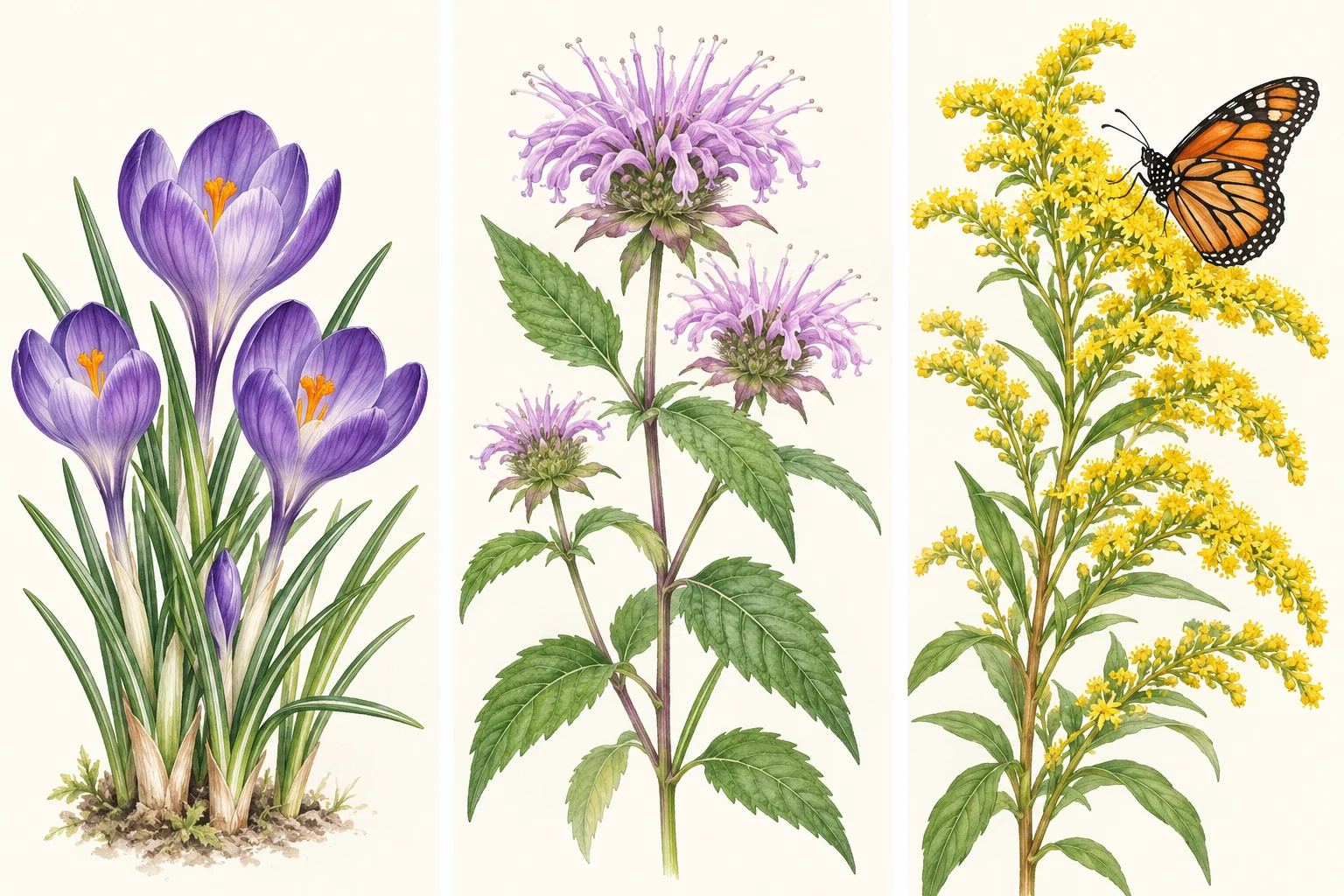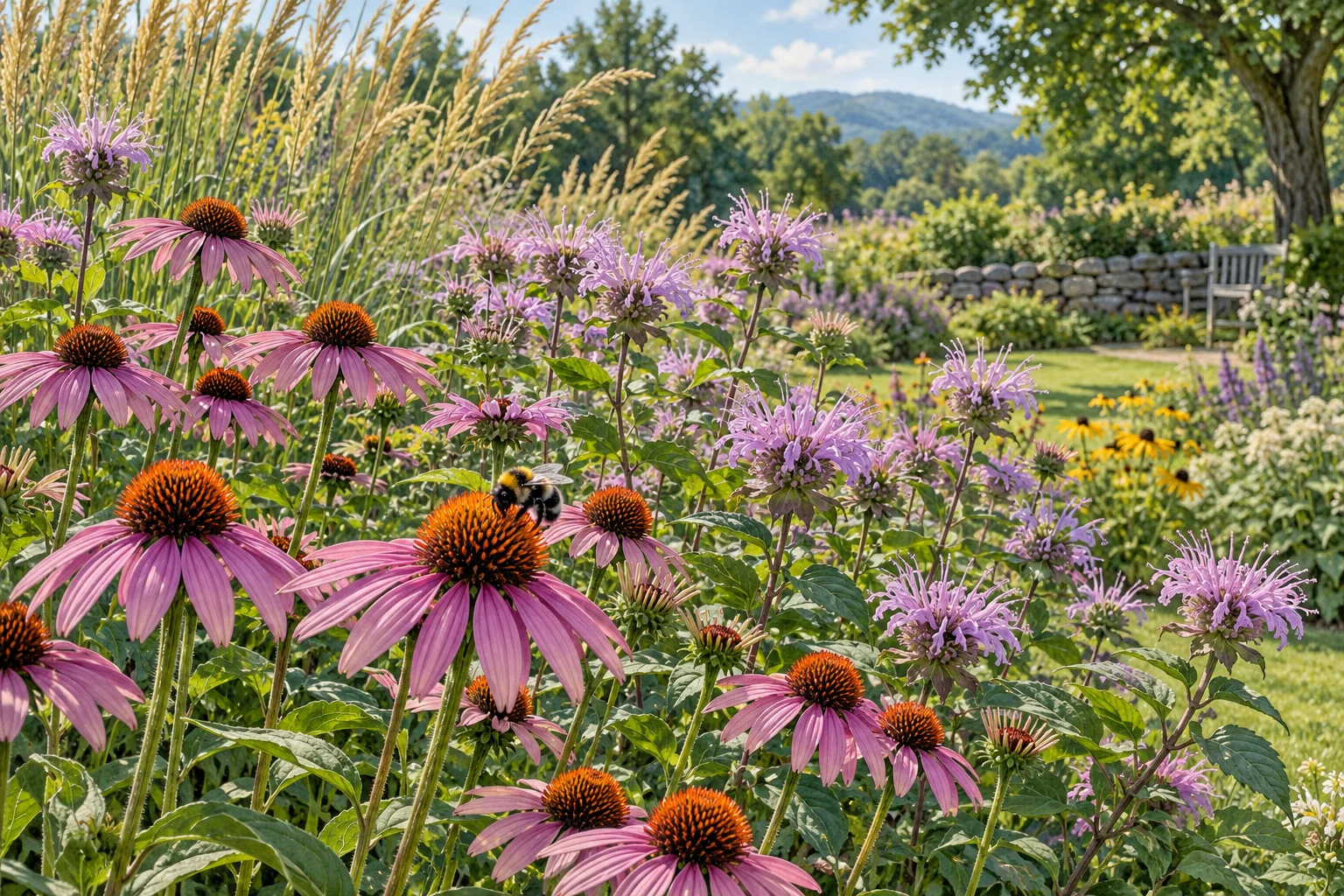
A pollinator garden in northern New England can help native bees, honey bees, butterflies, hummingbirds, and other flower visitors find food. A varied planting with flowers opening from early spring through late fall offers the greatest benefit. Even a modest flower patch contributes to the surrounding habitat. Flowers supply nectar, pollen, or both, while their shape affects which visitors can reach those resources. ## Plan for a sequence of flowers Begin with a seasonal question: what will be flowering before, during, and after the garden’s main display? Organize possible plants into those parts of the season before choosing the final mix. This turns a collection of attractive flowers into a plan for continuing food availability. You can apply that approach to a small bed as readily as to a larger landscape. Review the flowers already present, then look for gaps in the sequence. Use locally observed flowering and pollinator activity to guide additions; a plant’s appearance alone does not tell you how useful its flowers will be to visitors. ## Give perennials a central role Native American wildflowers can provide successive blooms from late spring into fall. The source recommends full sun and groups of three to five or more plants. Choose original species or cultivars with similar flower colors and forms, allowing for the tall, informal growth of some originals. Little bluestem and Indian grass add wildlife value. Dutch crocus can supply early flowers, while stonecrop and blanket flower are additional perennial options. Think in groups when arranging the perennial bed. Instead of placing every selection as a single specimen, sketch repeated clusters and consider how their flowering periods connect. Check the mature character of each choice against the space available: a loose, tall wildflower planting calls for a different arrangement than a compact border. For a meadow-style area, consider flowers and native grasses together. For a smaller garden, use the same seasonal planning process within a more limited selection. Neither approach requires including every plant mentioned here. The useful decision is which combination fits the space while extending the sequence of bloom. ## Choose annuals and let herbs flower Breeding for ornamental traits has reduced the pollinator appeal of some annuals; certain varieties lack pollen. Options listed for pollinators include sweet alyssum, ageratum, borage, cosmos, spiderflower, Mexican sunflower, and some zinnias and verbenas. Avoid pollenless sunflowers. Flowering basil, chives, lavender, oregano, rosemary, and catmint attract honey bees and some other pollinators. These herbs can be included among vegetables. Treat annuals as another selection to evaluate, rather than assuming every bedding plant offers the same resources. When choosing sunflowers, make pollen availability part of the decision. With zinnias and verbenas, remember that the source identifies only some types as useful; the recommendation does not establish equal value for every variety. An herb planting offers another opportunity to connect food gardening with flowers. Include flowering herbs in the vegetable garden plan, and allow blooms to develop where pollinator visits are part of your purpose. Then observe the flowers themselves. Comparing visits among your plants gives you a practical basis for deciding which selections to repeat. ## Include the woody landscape Flowering trees and shrubs also provide pollen and nectar, particularly when few other plants are blooming. Willows and serviceberries are early-spring options. The source’s spring-to-summer selections include highbush blueberry, raspberry, blackberry, common ninebark, inkberry, and winterberry. Apple, cherry, peach, and plum depend on insect pollination for fruit set. Include existing trees and shrubs when reviewing your garden’s flowering sequence. A plan focused only on the flower bed can overlook resources elsewhere in the yard. Consider woody plants alongside bulbs, perennials, annuals, and herbs so that each addition has a clear place in the seasonal picture. Keep refining the plan through observation. Notice which flowers receive visits, which flower forms visitors can access, and when the garden offers fewer blooms. Use those observations to choose the next addition. The aim is a varied, continuing supply of flowers, built from plants suited to the region and supported by local experience.